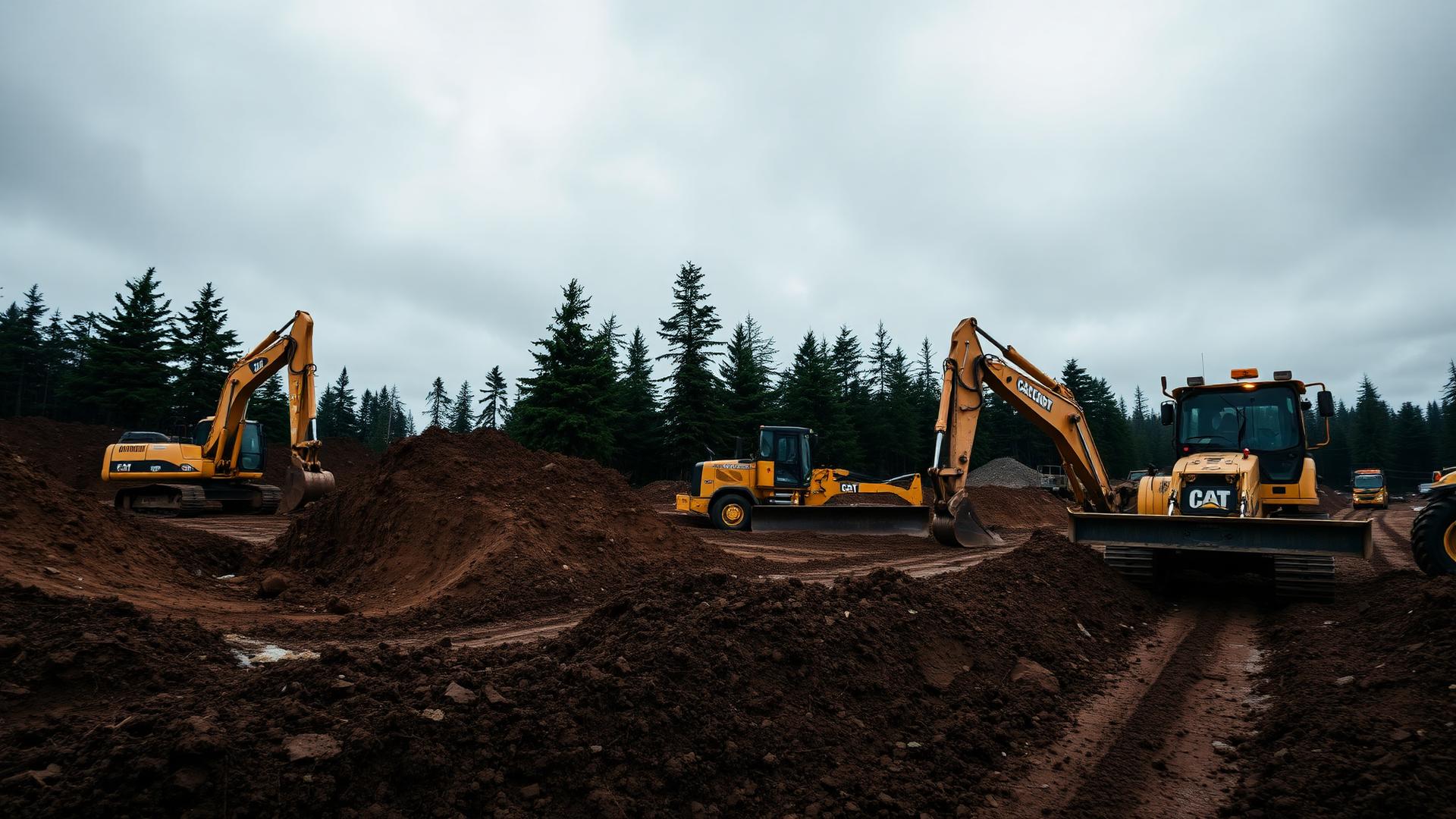
Excavation is more than moving dirt. The right method depends on soil type, slope, proximity to structures, and the finished use of the land. Below are the core excavation services Trident Excavation delivers across Whatcom County, from Bellingham to Sumas, with notes on how local terrain affects each approach.
Site Preparation
Site prep is the first physical step of most construction projects. It includes clearing vegetation, stripping topsoil, rough grading, and compacting the building pad so the site is stable and dimensionally accurate.
In Whatcom County, site prep often means working around glacially deposited rocks, tree roots, and variable moisture. We use GPS-guided grading equipment to establish precise elevations before foundations, slabs, or roadbeds go in.
- Topsoil stripping and stockpiling
- Rough grading to design elevations
- Soil compaction and proof rolling
- Utility rough-ins and erosion controls
Grading
Grading shapes the land surface to control drainage, support structures, and create usable slopes. It splits into rough grading (bulk earth movement) and finish grading (fine surface preparation for landscaping or pavement).
Whatcom's mix of flat farmland, rolling foothills, and steep shoreline bluffs demands different grading strategies. Finish grades near Birch Bay or the Nooksack delta, for example, must account for seasonal water tables and coastal winds.
- Rough and finish grading
- Road and driveway subgrade
- Slope shaping for drainage
- Pad and parking lot grading
Trenching & Utilities
Trenching creates narrow, controlled cuts for buried infrastructure: water lines, sewer lines, electrical conduit, gas pipe, and drainage. Accuracy and backfill quality matter because future leaks or settlement are expensive to fix.
Trident trenching crews work carefully around existing utilities and follow Washington State excavation safety rules. In forested or rocky areas, we may combine trenching with hydro-excavation or hand digging near sensitive lines.
- Water and sewer line trenches
- Electrical and communications conduit
- Drainage trenching
- Trench backfill and compaction
Land Clearing
Land clearing removes trees, brush, stumps, and debris to open a lot for building, farming, or fire-safety maintenance. It ranges from light brush mowing to full-acre clearing with stump grinding and haul-off.
Forested properties near Mount Baker or the foothills often contain dense root mats and slash piles. We separate reusable timber from debris, grind stumps below grade, and restore access roads to prevent rutting.
- Tree and brush removal
- Stump grinding and root raking
- Debris hauling and recycling
- Selective clearing to preserve trees
Foundation Excavation
Foundation excavation digs basements, crawl spaces, footings, and pier holes to the exact depth and width specified by engineered plans. Over-excavation or poor sidewall stability can compromise the entire structure.
Rocky soils in parts of Ferndale and Lynden may require breaker work or controlled blasting. In softer soils near waterways, we install dewatering and shoring to keep trenches safe and dry.
- Basement and crawl-space excavation
- Footing and pier holes
- Rock breaking and removal
- Shoring and dewatering coordination
Demolition
Demolition removes unwanted structures, foundations, concrete slabs, and pavements. It includes mechanical teardown, material separation, and responsible disposal or recycling of concrete, wood, and metal.
On tight Whatcom County lots, demolition requires dust control, debris containment, and protection of neighboring properties. We handle permits and utility disconnects so the site is clean and ready for the next phase.
- House and outbuilding demolition
- Concrete and asphalt removal
- Foundation and slab removal
- Site cleanup and grading
Drainage & Erosion Control
Drainage excavation installs systems that move water away from structures and roadways: French drains, catch basins, culverts, swales, and stormwater ponds. Erosion control keeps sediment on-site and out of waterways.
Whatcom County receives significant rainfall, and low-lying properties near the Nooksack River or coastal plain are especially vulnerable to saturation. Proper drainage design protects foundations and extends the life of paved surfaces.
- French drains and curtain drains
- Culvert installation
- Swales and bioswales
- Silt fence and erosion controls
Pond & Basin Construction
Pond excavation builds farm ponds, retention basins, fire-suppression ponds, and aesthetic water features. The work involves precise shaping, outlet pipes, spillways, and often liner or clay seal preparation.
In agricultural areas around Lynden and Everson, ponds manage irrigation and livestock water. In developing areas, detention basins satisfy stormwater requirements. We verify soils and water sources before breaking ground.
- Farm and stock ponds
- Stormwater detention basins
- Spillway and outlet installation
- Liner prep and sealing
Whatcom County Terrain Considerations
Every excavation method changes slightly based on the ground we're working in. Here is how Trident adapts to the three terrain types most common across our service area.
Rocky Ground
Whatcom County's glacial till and compacted basalts can stall standard buckets. We use hydraulic breakers, ripper attachments, and controlled blasting partners when bedrock is shallow.
Forested Lots
Dense Douglas-fir, cedar, and alder stands require selective tree removal, stump grinding, and careful root-zone protection. We preserve desirable trees and minimize soil compaction.
Wetland & Lowlands
Seasonally saturated soils near the Nooksack River and coastal plain need dewatering, geotextile stabilization, and permit-aware scheduling to protect waterways and native vegetation.
Frequently Asked Questions
- How do I know which excavation service I need?
- Start with your end goal. Building a home usually begins with site prep and foundation excavation. Installing a septic system requires trenching and drainage. Large raw lots need clearing and grading first. We help scope the right sequence during our site visit.
- Do I need permits for excavation in Whatcom County?
- Most projects require some level of permitting — building, grading, septic, shoreline, or critical-areas review. Trident coordinates with local jurisdictions and can recommend engineers or surveyors when plans are required.
- How does rocky or forested land affect cost?
- Rock, dense trees, and wet soils add time and equipment. A site walk and test pits help us estimate accurately rather than guessing. We price by the scope, not by surprises.
- What areas does Trident Excavation serve?
- We work throughout Whatcom County — see our Whatcom County service areas for detail on excavation contractors in Bellingham, Ferndale excavation services, Lynden site prep and grading, and Blaine land clearing and septic excavation.